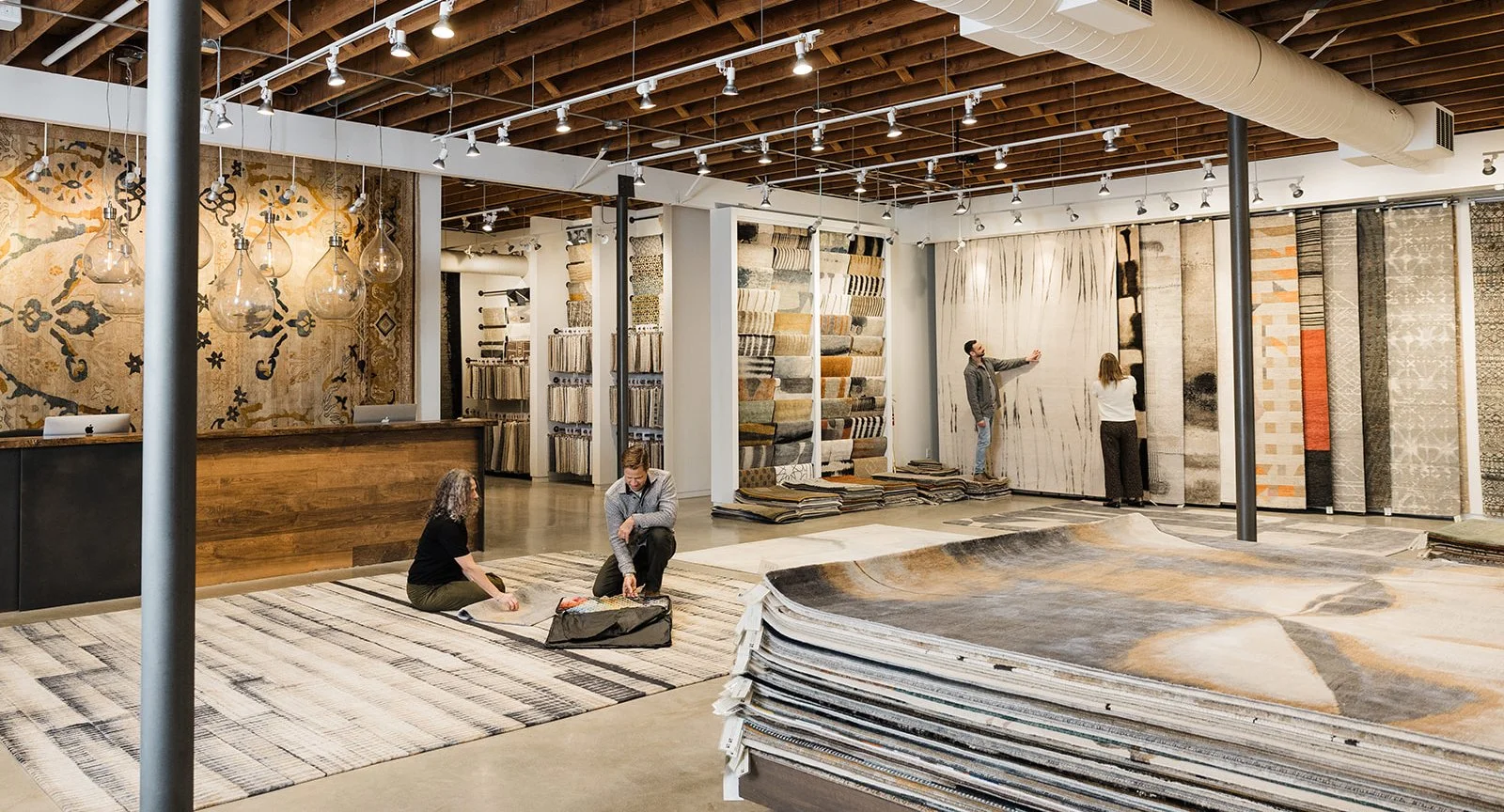
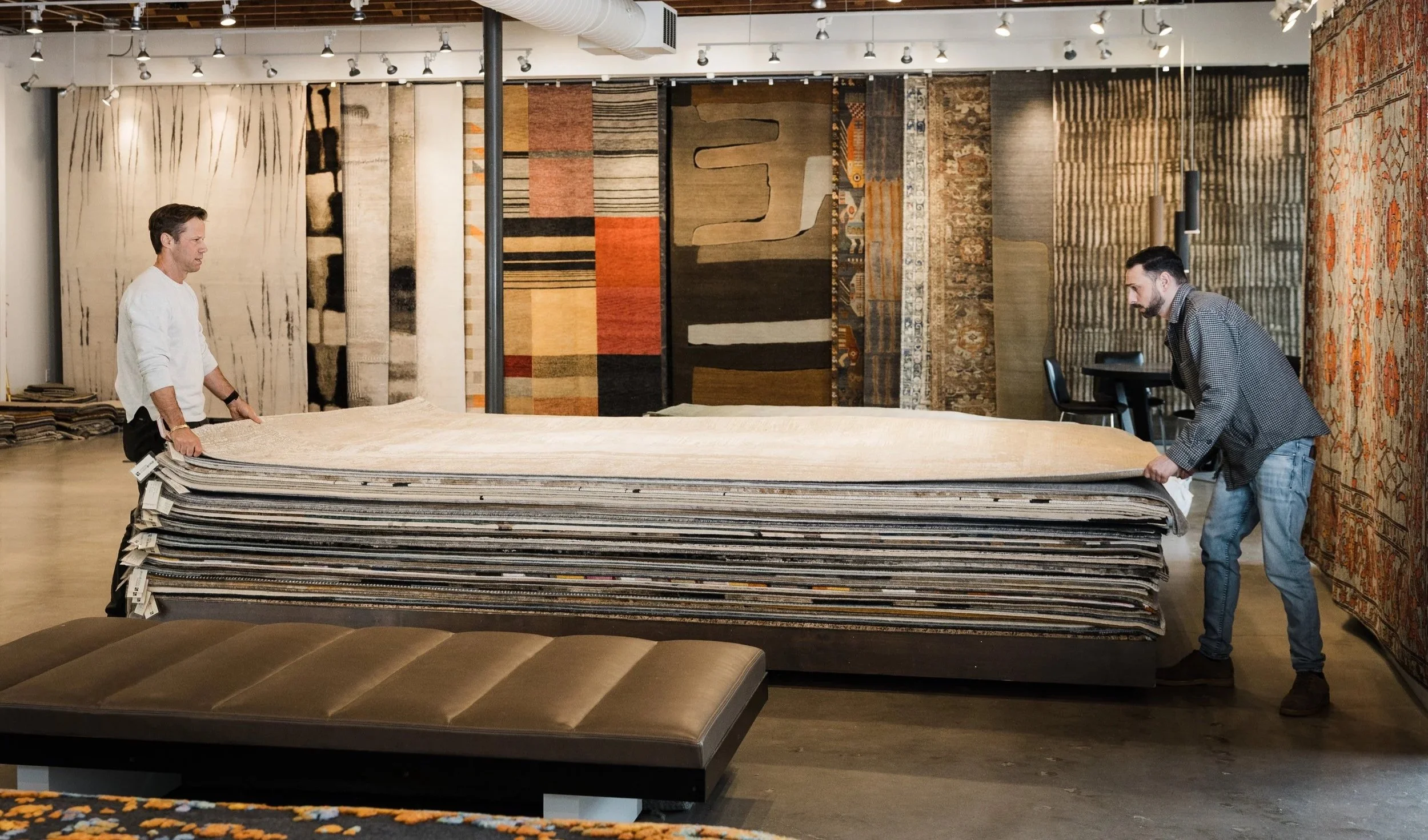
Stop by our showroom, located in Georgetown across from the Seattle Design Center.

We will gladly bring as many rugs as necessary to your home and lay them in place. We also encourage you to keep them overnight and live with them for a day or two to see the rug in different lighting.
Whether it is a home showing, an install, or a simple drop-off, we offer free deliveries with all of our services at no cost to you.
The Driscoll Robbins team have years of experience helping customers select the perfect carpet for their space. We always help our clients find their forever rug.
Our showroom has plenty of free client parking.
“Growing up with parents in the antique rug business, I never imagined following in their footsteps. Apparently, years spent in dusty old carpet stores in Afghanistan and Iran have a way of rubbing off on a kid. These photos from the early days may not be the best quality but they sure tell a rich story.”
— DRISCOLL






The GoodWeave label means that no child, forced or bonded labor was used in the making of a certified product, and that your purchase supports programs that educate children and ensure decent work for adults. Here’s how it works.
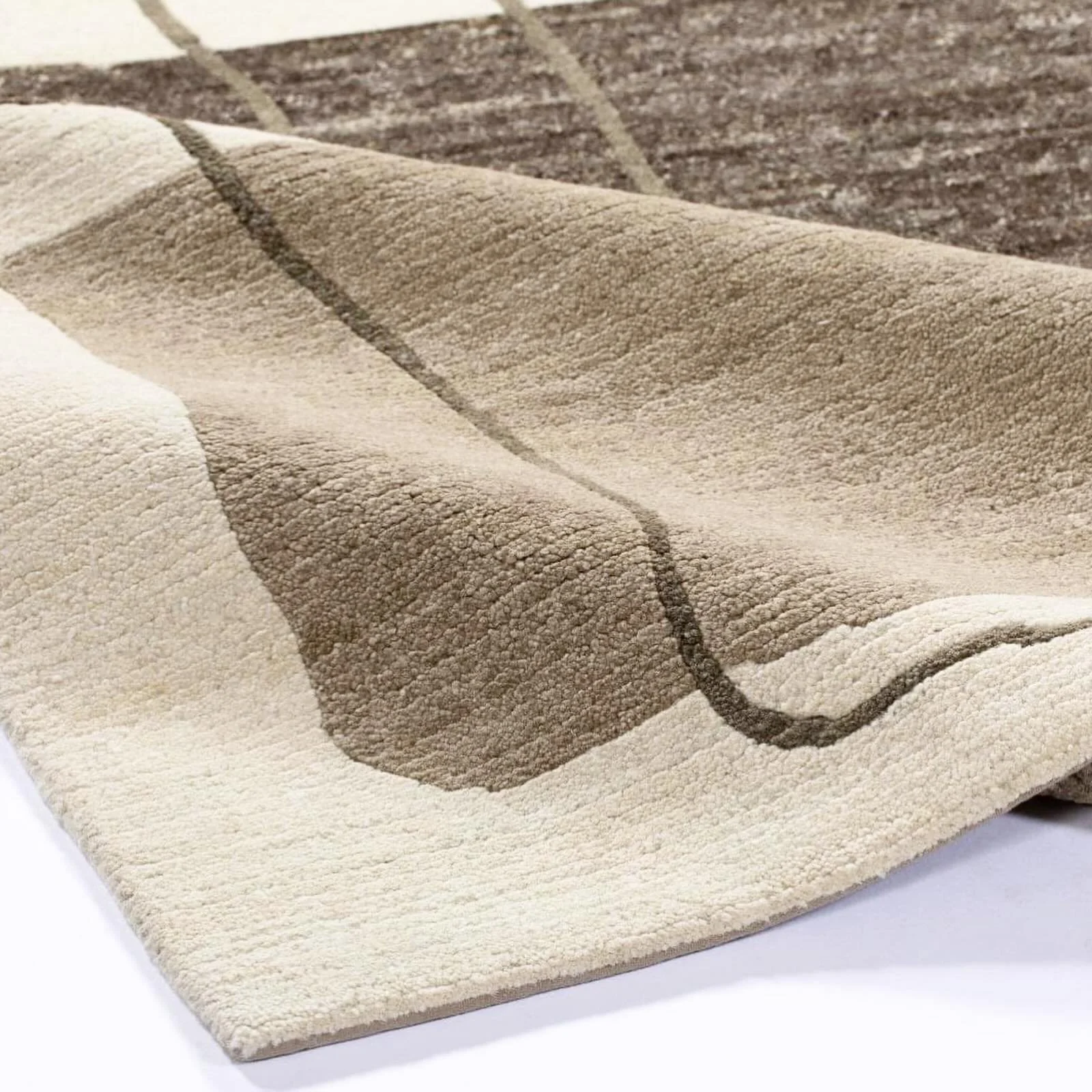
When choosing a high-quality, hand-woven carpet, there's a lot of misinformation out there. Many people focus on knot count and intricate designs, but these factors have little to do with the rug's overall quality. I always advise my clients the most crucial aspect of a carpet’s quality is the material used in its weaving. No matter how finely woven a carpet is, it won’t last if it isn’t made with wool and dyes that can endure years of wear. The quality of the wool directly influences the rug’s longevity and gives it a luxurious texture and finish.
The finest yarn comes from sheep bred for centuries to produce wool rich in lanolin. This wool is then hand-carded, hand-spun, and colored by master dyers. Keeping the wool in its natural form allows it to retain essential oils, which protect and strengthen the fibers over time.
In contrast, many rugs on the market today are made with highly processed New Zealand wool. This wool is bleached, stripped of its oils, and then machine-spun into overly uniform yarn. While these rugs may feel soft and can be woven with tighter knots, the yarn lacks vitality and deteriorates more quickly.
When designing a room, most professionals agree it’s best to start with the carpet and build the space from there. It's much easier to select fabrics and accessories that complement the carpet rather than choosing a carpet after everything else is in place.
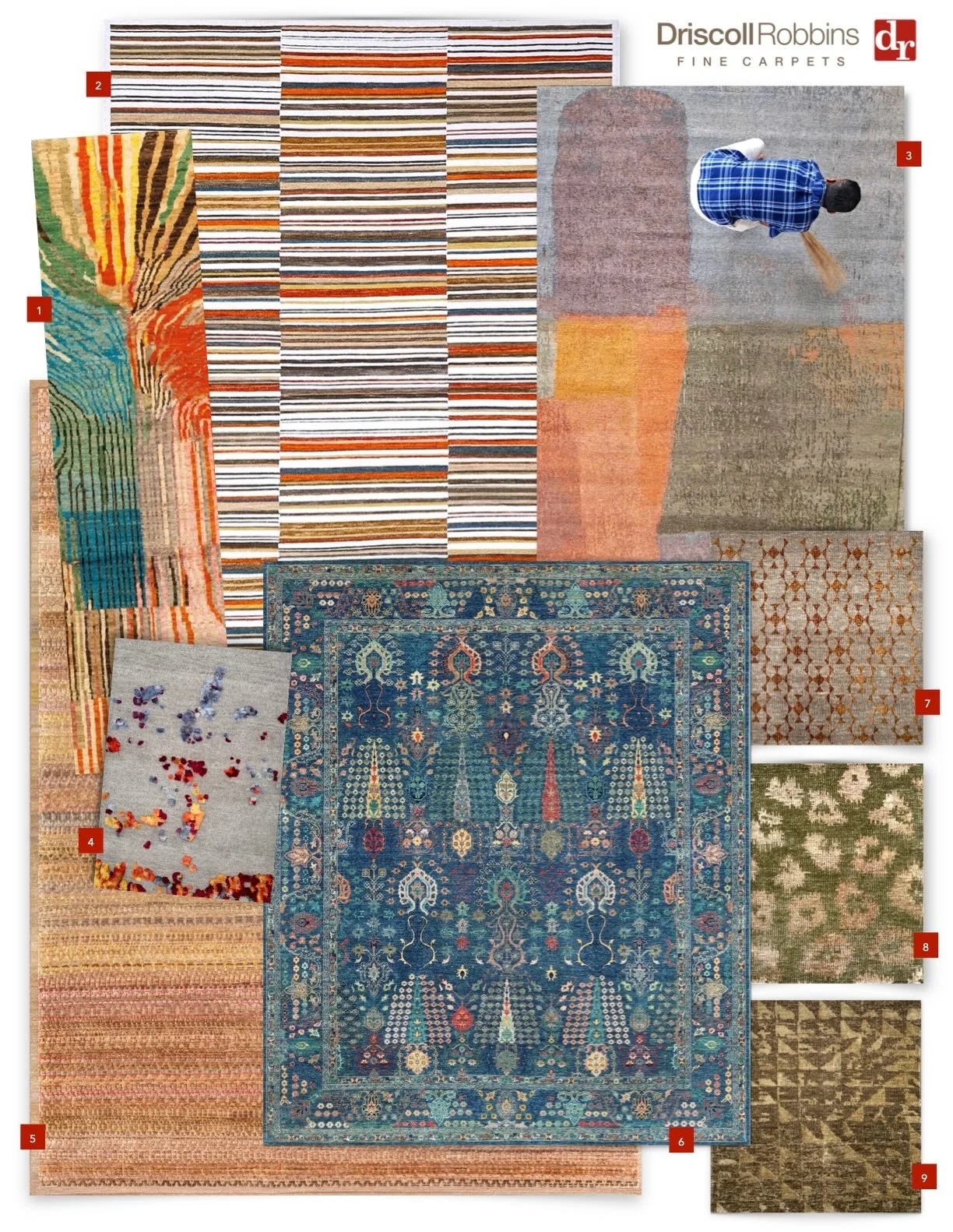
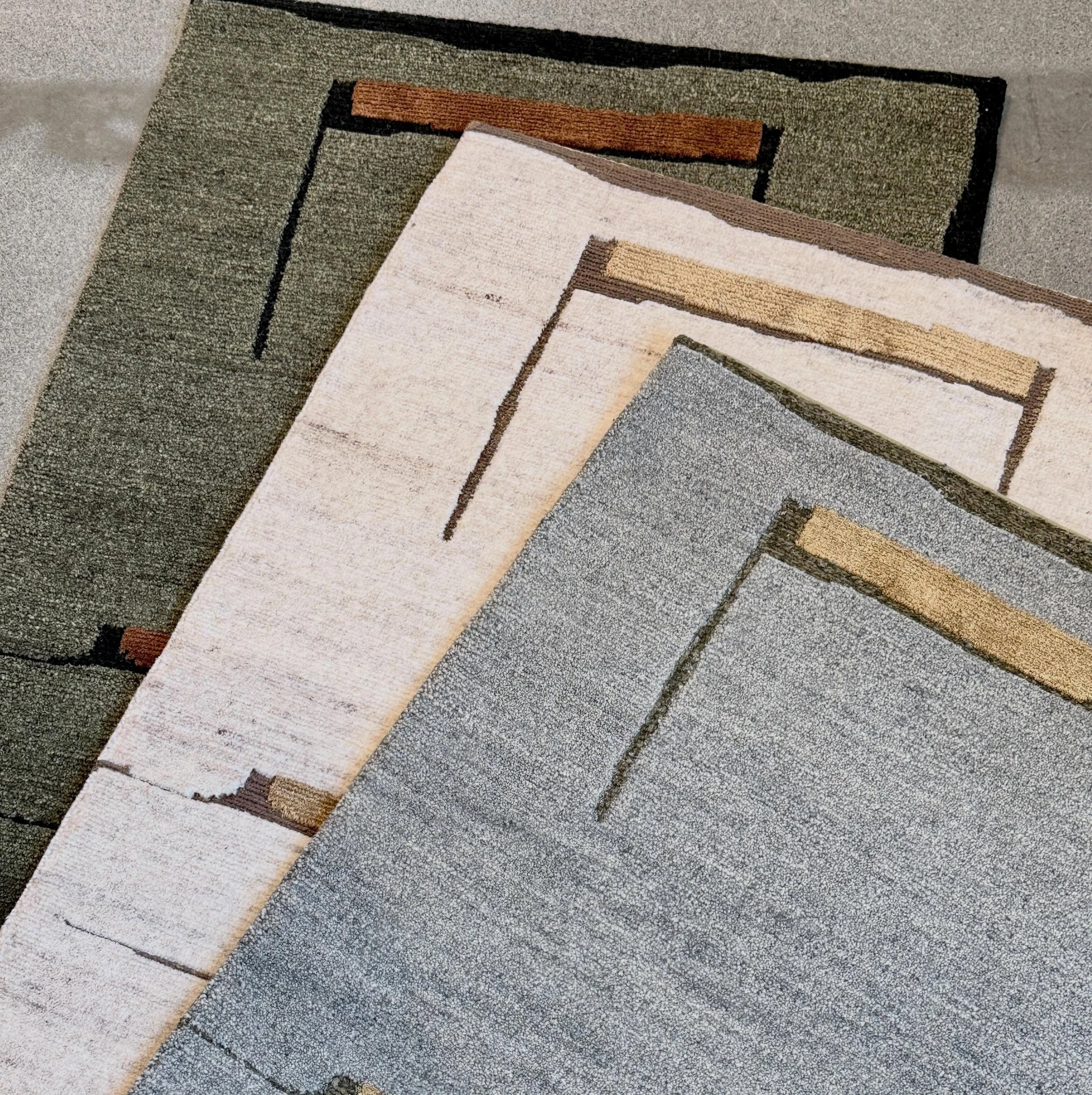
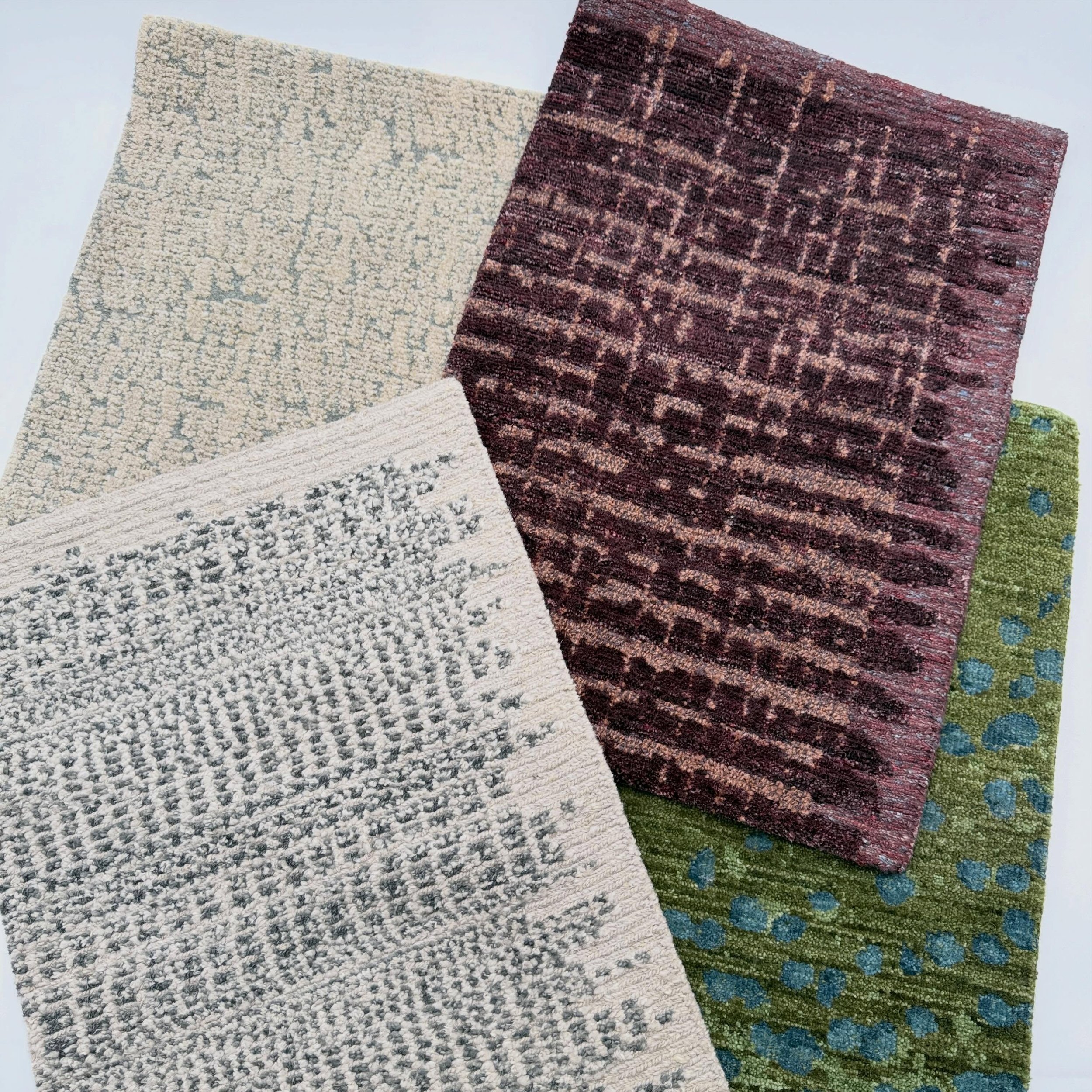
Before visiting a carpet showroom, be sure you know the minimum and maximum dimensions for the rug you need. It’s also helpful to bring along paint samples, fabrics, or even a pillow from your sofa. Consider the style of rug you're looking for—whether traditional, contemporary, or transitional. Browsing home furnishing magazines and bringing photos of styles you like can also be beneficial.
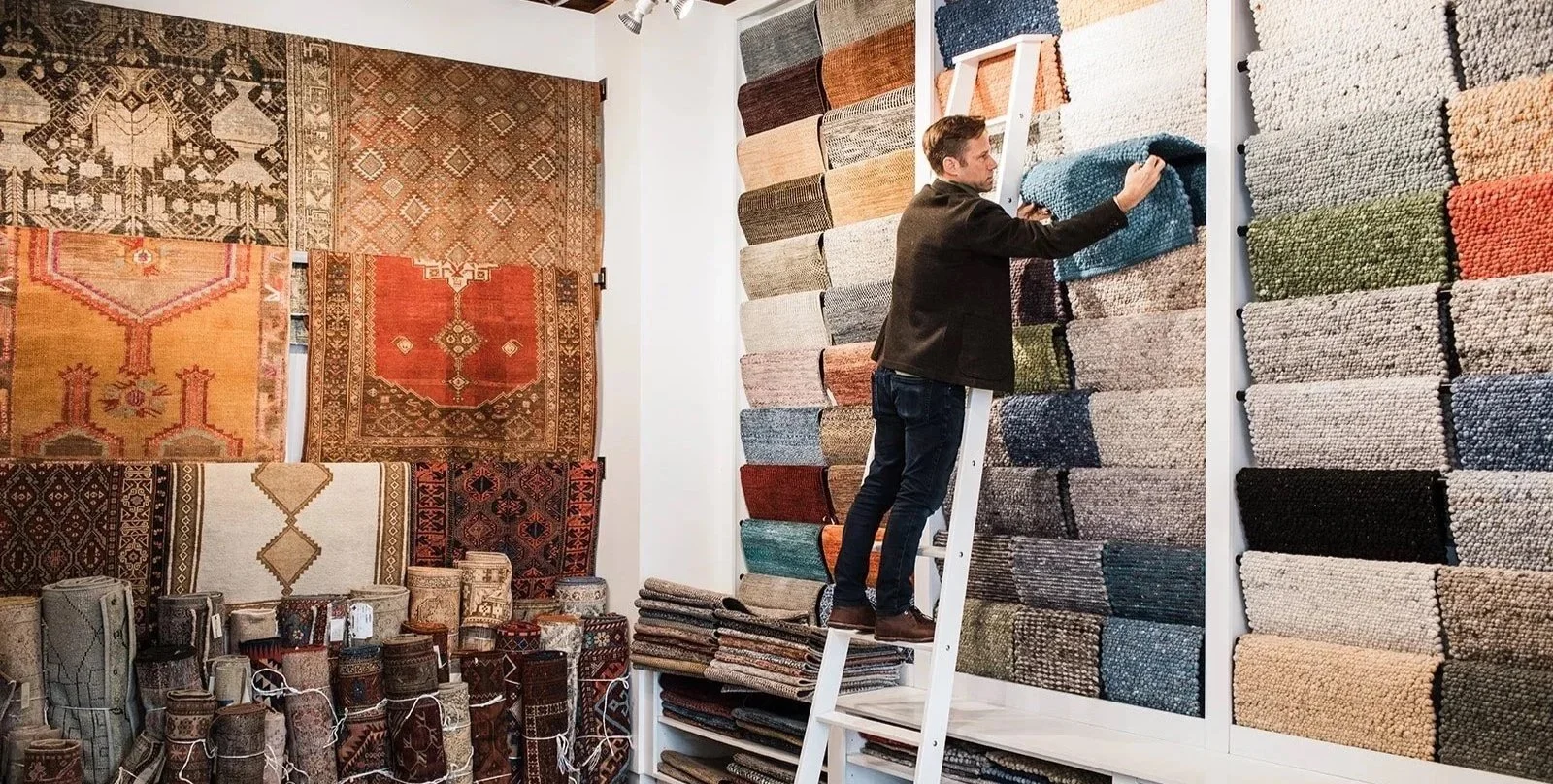
Reputable dealers will encourage you to try out rugs in your home before making a purchase. When you visit our showroom, we will guide you through our inventory and keep records of any options you find appealing. We offer a free delivery service, allowing you to view as many options as you like in your home. Our goal is to ensure you are completely satisfied with your choice before you buy.
Our knowledgeable sales staff is here to assist and can make home visits as well. If you’re in need of an interior designer, feel free to give us a call, and we’ll be happy to recommend one for you.
We recommend having your carpet cleaned every 2 to 5 years depending on use.
Never steam clean or dry clean a high quality rug.
Always have your carpet cleaned by someone specializing in hand-cleaning. We are happy to provide a list of reputable rug cleaners in the Seattle area.
Vacuuming should be done on a regular basis to prevent dirt and grit from settling into the pile of the carpet, and it is best practice to use straight suction instead of the beater bar.
Appropriate padding extends the life of a rug and prevents a rug from slipping or buckling.
Blot, never scrub spots on a rug. Excessive scrubbing can damage and distort the nap on a carpet, and can set the stain further into the rug.
With liquid spills, always remove as much of the spill as possible before adding spotting products. Blot the spill with a clean rag or towel. To clean a spot, always use cold water. If something stronger is needed, we recommend a mild detergent diluted with cold water. Useful detergents include: Bio-Clean all purpose cleanser, Planet Detergent, Seventh Generation, or a tiny amount of Ivory liquid.
Some spots are better handled by professional rug cleaners. Examples include pet urine, vomit, ink or dried wine. The longer you let a spot sit, the harder it will be to get out.
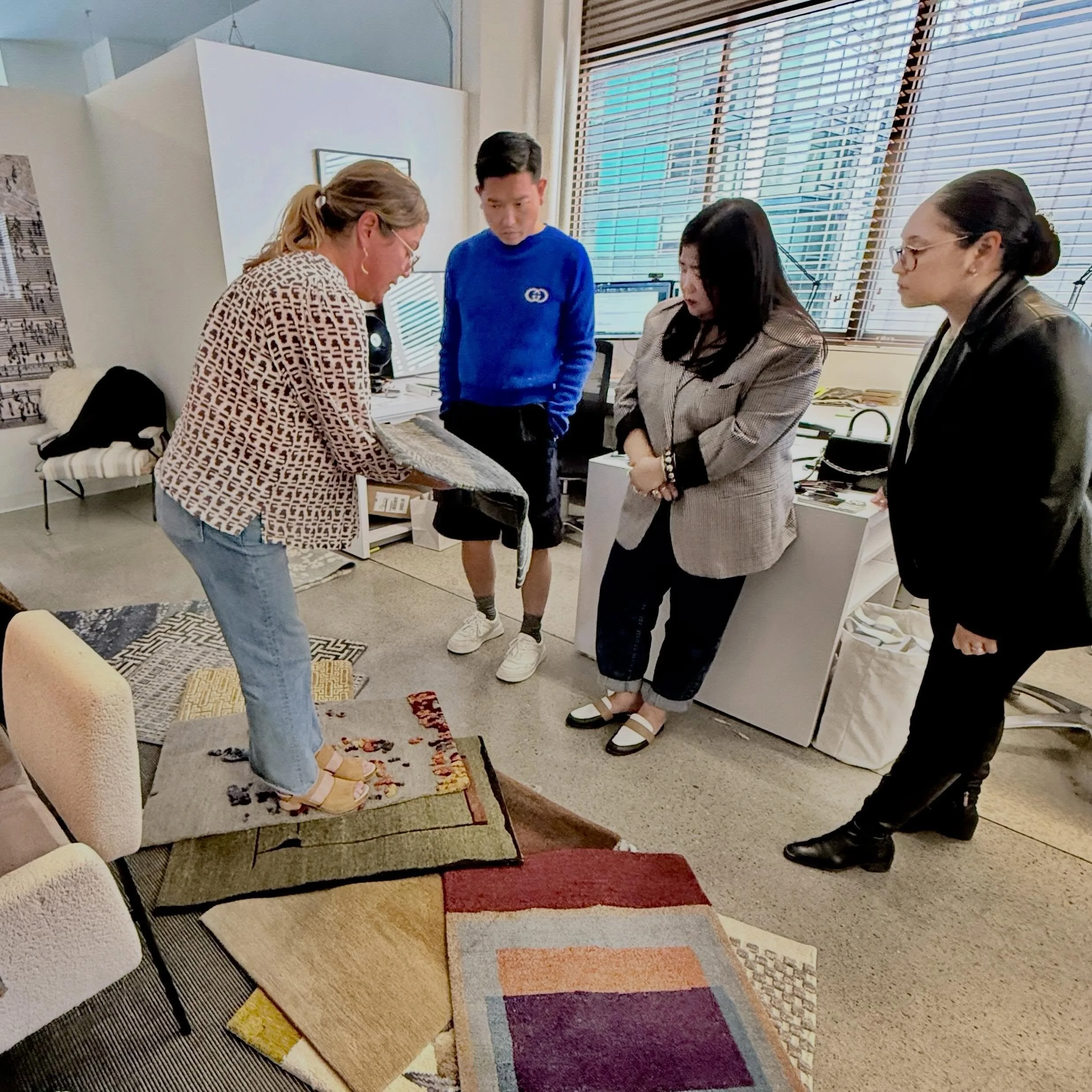






Family photo taken in the first Baktiari Gallery on Union Street, San Francisco. Ginger, Driscoll, Arky, and Zoe Robbins.